Talk to us

Investment Matters: When Forecasts Fail, Fixed Income Flexes

By
Paul Kenworthy

News

Robert Rubin once said: “Some people are more certain of everything than I am of anything.”It’s a reminder that in investing, the only certainty is uncertainty.

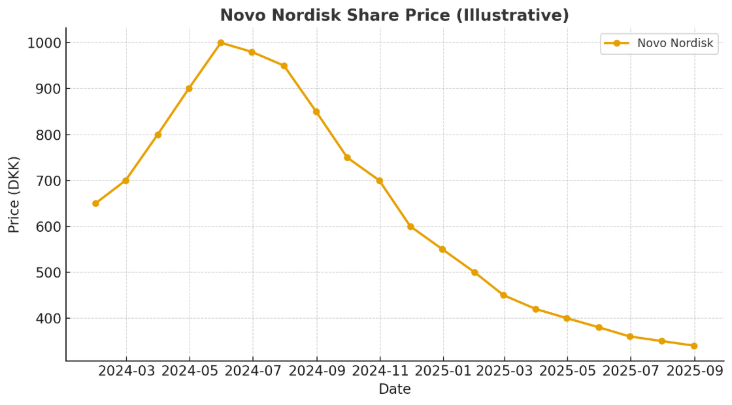
Two recent stories underline this. First, Novo Nordisk lost a fifth of its value in a single day after lowering its 2025 profit forecast. The company is still set to grow – just not at the sky-high levels investors had assumed. The result? Shares fell two-thirds from their peak, punishing anyone who believed growth would continue in a straight line.

Chart 1: Novo Nordisk's sharp share price fall shows how quickly lofty forecasts can unravel.

Chart 1: Novo Nordisk’s sharp share price fall shows how quickly lofty forecasts can unravel.

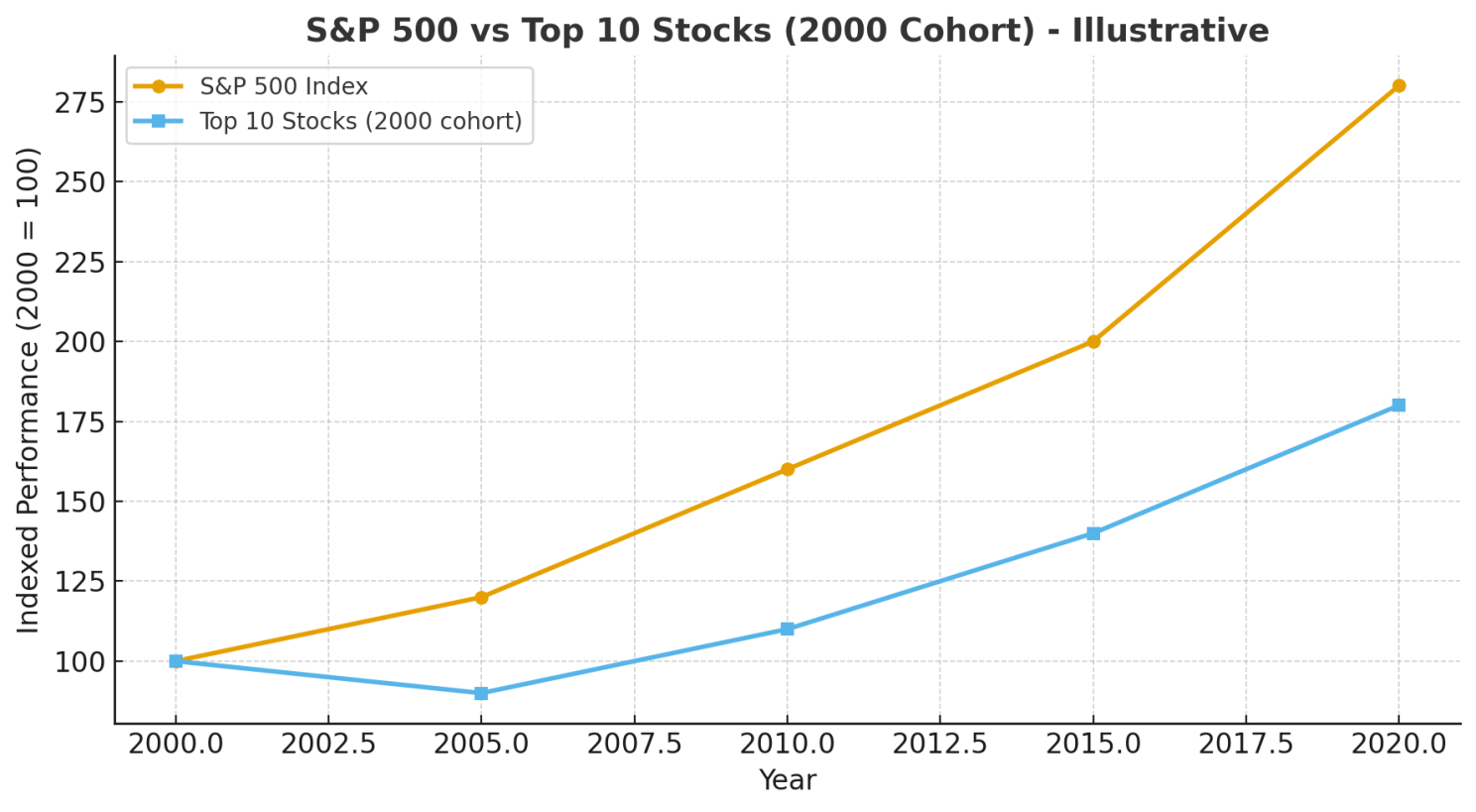
Second, Deutsche Bank data shows only two of the ten largest companies in 2000 have outperformed the S&P 500 since then. Some now earn less than they did 24 years ago. Today’s “Magnificent Seven” may look unstoppable, but history suggests otherwise. Forecasts built on confidence often crumble under reality.

Chart 2: The top 10 stocks of 2000 underperformed the S&P 500 over the following two decades, a warning for todays market favourites.

Chart 2: The top 10 stocks of 2000 underperformed the S&P 500 over the following two decades, a warning for todays market favourites.

So what does this have to do with bonds? Everything.


Bonds aren’t equities – and that’s the point

It’s tempting to apply the same logic to bonds that we use with equities: buy the index, avoid active managers, keep costs low. But fixed income is different.

  • The Bloomberg Global Aggregate Index tracks over 31,000 securities across 72 countries.
  • By comparison, the FTSE All-World Index covers around 4,200 equities.

Bond markets are vast, fragmented, and constantly evolving as new issues replace old ones. Companies issue one class of shares, but often dozens of bonds, each with different maturities, coupons, and structures.

That complexity creates inefficiencies – and inefficiencies create opportunity.

📖 For context, see the FCA’s overview of fixed income products and risks.


Why active fixed income still matters

In equities, active managers often struggle to beat the benchmark after fees. In bonds, the story can be different.

Active managers can:

  • Unearth overlooked bonds that rarely trade but offer attractive risk-adjusted returns.
  • Tilt towards improving economies, where sovereign yields are falling.
  • Select issuers with strengthening fundamentals, where credit spreads may tighten.

They don’t need to forecast the future perfectly. They just need to use flexibility to reduce exposure where risk is rising, and increase exposure where markets misprice resilience.


Managing risk when forecasts fail

For clients, the bigger benefit isn’t just potential alpha – it’s risk management.

When expectations break down in equities, valuations can collapse overnight (as Novo Nordisk showed). In fixed income, active managers can adjust portfolios dynamically to smooth returns, protect capital, and keep portfolios aligned with client goals.

That agility supports:

  • Capital preservation for clients worried about volatility.
  • Income stability when yields are attractive but uneven.
  • Outcome alignment, a key requirement under the FCA’s Consumer Duty PS22/9.


Passive vs. active – not either/or

None of this means passive bond funds don’t have a place. They remain a low-cost way to gain broad exposure. But framing the choice as “all passive” or “all active” is misleading.

The sweet spot may be benchmark-aware strategies: active funds that keep costs in check while using their flexibility to manage risk and exploit inefficiencies. Vanguard’s Global Core and Global Strategic Bond Funds are examples, designed either as standalone allocations or complements to index exposure.


What advisers and paraplanners should take away

For advisers, the key message for clients is simple: forecasts will fail. What matters is whether portfolios can flex when they do.

For paraplanners, this means documenting the rationale clearly:

  • Diversification beyond the benchmark
  • Risk management as well as return
  • Alignment with client objectives, not just performance targets

That alignment is what makes suitability defensible – and what helps clients stay invested when forecasts inevitably disappoint.


The bottom line

Forecasting may be fragile, but strategy doesn’t have to be. Equity markets will always lure investors with stories of endless growth. History suggests those stories often end badly.

Bond markets, by contrast, offer scope to use complexity and inefficiency as tools for stability. Active fixed income isn’t about outguessing the market. It’s about building portfolios that remain resilient when the forecasts go wrong.

And if the last few months have shown us anything, it’s that forecasts willgo wrong.

👉 If this resonates with what you’re seeing in client conversations, we’d love to hear from you.


Tax-Free Wealth Building in 2025: The Rise of Whisky Casks

A niche investment going mainstream

For years, whisky cask investment has been a quiet corner of alternative investing – something discussed more in collectors’ circles than in financial advice meetings. But 2025 is seeing a shift. Headlines talk about whisky casks as a tax-free wealth-building tool and investors are increasingly curious about whether this is a serious asset class or just another fad.

Cask Capital describes whisky casks as one of the “last tax-free investment opportunities in the UK,” highlighting both the capital gains tax exemptionand the growing global appetite for rare spirits. But as with any trend that promises outsized returns, financial advisers and paraplanners need to separate the marketing from the mechanics.


Why investors are drawn to casks

According to recent commentary:

  • Tax treatment: Whisky casks are classified as a “wasting asset” in the UK. This means they typically escape Capital Gains Tax (CGT). That’s a powerful hook for clients searching for tax efficiency.
  • Supply and demand: Whisky production is limited, maturation takes years, and global demand-particularly from Asia and North America-has never been stronger.
  • Portfolio diversification: As an alternative investment, casks aren’t correlated with equities or bonds. They can add resilience in volatile markets.

It’s no wonder some investors now see whisky casks as a tangible, inflation-resistant store of value.


The practical risks

Of course, not all that glitters (or glows amber in a glass) is gold. A sober perspective is essential.

  • Liquidity: Selling a cask isn’t like trading a share. The market is opaque, and exits can be slow.
  • Valuation uncertainty: Cask value depends on age, distillery, and storage conditions. Transparent pricing data is limited, making it difficult to assess fair value.
  • Fraud and mis-selling: Which? recently warned about firms overpromising or disguising fees in whisky investment schemes. This is a red flag advisers must highlight when clients show interest.

The FCA has also flagged concerns about niche, unregulated investments being sold without appropriate risk warnings. As with crypto a few years ago, consumer protection is the big question mark.


Choosing the right cask (if at all)

For clients who remain intrigued, there are some practical filters:

  • Work with reputable brokers – Organisations like London Cask Traders and Cask Capital provide educational resources and (to an extent) pricing frameworks.
  • Focus on established distilleries– Well-known Scottish distilleries with consistent brand value are less risky than newer entrants.
  • Understand storage– Where and how the cask is matured affects both quality and value. Poor warehousing can erode returns.
  • Plan the exit– Whisky isn’t just held; it’s sold. Advisers should stress the importance of understanding resale channels and timelines.

For advisers, the key is helping clients weigh the romance of owning a whisky cask against the practical realities of managing an illiquid, alternative asset.


What to tell clients

  • Whisky cask investment candeliver attractive returns, but it’s not risk-free.
  • Tax benefits are real but depend on HMRC continuing to classify casks as wasting assets. Policy changes could alter this.
  • Due diligence is critical. If a client brings you a glossy brochure promising double-digit annual returns, approach it with the same scrutiny as any unregulated scheme.

Ultimately, advisers should frame whisky casks as a specialised, high-risk allocation-a potential addition for well-diversified, high-net-worth clients who understand the risks, but not a mainstream tax solution.


Our take

At We Complement, we don’t dismiss niche investments outright. They can spark valuable client conversations and open doors to deeper planning discussions. But our role-as paraplanners, advisers, and suitability consultants-is to stress test the logic, highlight the pitfalls, and make sure clients are making decisions with eyes wide open.

As the FCA’s Consumer Duty continues to sharpen expectations around evidencing good outcomes, it’s never been more important to document whyan investment is or isn’t appropriate. And whisky, for all its allure, demands that kind of clarity.


Final thought

Alternative investments like whisky casks will always attract attention, particularly in uncertain markets. The real test for advice firms is whether these ideas are handled with rigour and balance. Clients deserve both the excitement of opportunity and the discipline of good governance.

If this resonates with what you’re seeing in client conversations, we’d love to hear from you.


Ask most advice firms how they assure quality, and you’ll get a familiar answer: “We do QA checks after the file’s been submitted.” But here’s the rub. If your quality control only kicks in at the end, you’re not protecting your clients. You’re just crossing your fingers.

At We Complement, we believe the future of advice assurance isn’t reactive. It’s structured, evidentiary, and embedded from the start. And that’s where the Suitability Consultant comes in.


Why Traditional QA Isn’t Enough

Let’s be clear. Retrospective file checks still have a place. But they can’t carry the weight of regulatory expectation on their own. They’re too slow to prevent harm, too subjective to be consistent, and too backward-looking to drive change.

Retrospective QA creates what we call a “file repair culture.” Mistakes get patched, but root causes go unaddressed. That’s risky, especially under Consumer Duty, where firms must show how their advice actively delivers good outcomes, not just avoids harm after the fact.

Key rules like:

  • COBS 9.2.1R (client suitability)
  • SYSC 3.2.6R (risk systems and controls)
  • PS22/9 (Consumer Duty)

…all require more than a tidy report. They demand a traceable advice logic that can stand up to internal scrutiny, external audit, and the FCA’s expectations for evidentiary discipline.


The Shift: Advice Built to Be Audited

Suitability Consultants operate differently.

Where a traditional paraplanner might build a report around adviser input, we start earlier in the process — testing the inputs themselves. Is the risk profile consistent with the objectives? Do the factfinding notes back up the recommendation? Are product choices driven by need, not preference?

Our process uses a structured toolkit:

  • ARC (Advice Readiness Checks): Pre-advice triage that surfaces gaps in client context, factfinding, and risk profiling.
  • ASL (Advice Suitability Logic): A 130+ rule framework to test alignment to FCA standards.
  • SMS (Suitability Matrix Score): A logic-graded, versioned evidence report that supports both internal QA and external defence.


From QA to Proactive Precision

This isn’t about more process. It’s about smarter structure. When advice is built using embedded frameworks, QA becomes a formality. By the time the file lands in compliance’s hands, the logic is already documented, tested, and version-controlled.

Think of it this way:

  • Traditional QA: “Does this advice meet the standard?”
  • Suitability Consultant: “Let’s make sure the advice was built to the standard.”

That’s a big difference. It moves assurance upstream, where it can actually influence outcomes.


What This Means for Your Firm

If you’re still relying solely on end-stage checks, you may be exposing your firm to:

  • Governance gaps — where override patterns go unnoticed
  • Rework and delays — from back-and-forth file edits
  • Audit risk — because logic can’t be clearly evidenced
  • Inconsistent advice — when paraplanners have to “make it fit” post-fact

By embedding a Suitability Consultant model, you get:

✅ Advice logic aligned before submission

✅ FCA-mapped standards from start to finish

✅ Evidentiary assurance that supports SM&CR accountability

✅ Fewer escalations, faster delivery, and stronger client outcomes


Practical Tip: Test Your Own Files

Want a quick way to see if your process is fit for purpose? Pick three recent advice cases and ask:

  1. Could someone with no context follow the logic from factfind to recommendation?
  2. Are product choices justified in the client’s words, not just the firm’s preferences?
  3. Would the file survive scrutiny without any “explainer” from the adviser?

If you answered “no” to any of those, don’t worry. It just means there’s room to evolve.


A New Standard Is Emerging

As regulation tightens and insurers demand more rigour, firms can’t afford to view QA as a final checkbox. The bar is rising. The ability to show how advice was constructed — step by step, standard by standard — is becoming a baseline expectation.

Suitability Consultants aren’t just helpful. They’re strategic infrastructure. And for firms who want to stay ahead, they may be the most valuable hire you’ve never made.


There’s a quiet but important shift happening across adviser tech, and if you blink, you might miss it. We’re not talking about a shiny new CRM or another data dashboard. We’re talking about what’s going on under the hood: integrations, partnerships, and AI pipelines that are shaping how advice gets built and delivered.

This month alone, we’ve seen:

  • FNZ team up with Microsoft to explore AI-powered advice tooling
  • Twenty7tec roll out a planning module with new CRM and cashflow integrations
  • City AM select Third Financial as a new platform partner

That’s three signals in one month pointing to a bigger trend: the advice tech stack is maturing, and integrations are becoming non-negotiable. But what does that really mean for financial planners and paraplanners? And where does it leave firms trying to deliver good advice, not just good systems?

Let’s dig in.

From Tools to Ecosystems

We’ve all worked with ‘tech’ that made life harder, not easier. A platform login that doesn’t speak to the CRM. A client risk score stuck in a PDF. Rekeying data into suitability reports (again). It’s no surprise that some advice firms have been slow to adopt new tools—they’ve been burned before.

But the nature of tech is changing. What we’re seeing now isn’t just more tools, but better connectivity between them.

Take the Twenty7tec update as a prime example. Their new integration layer links to iPipeline, Genovo, Timeline, and more, bridging the gap between planning, risk, and suitability workflows. According to CEO James Tucker, “the focus is now on connecting, not just creating”.

This shift matters. Because disconnected tools don’t just slow teams down—they create advice risk. When data gets re-entered or misaligned between systems, the integrity of the advice narrative suffers. And under Consumer Duty, ‘close enough’ just isn’t enough.


Enter AI: Assistant or Risk?

Then there’s AI. The FNZ–Microsoft announcement highlights a growing appetite to embed large language models (LLMs) into advice tooling—think summarisation, pattern detection, and even recommendation support.

On paper, this sounds great. But here’s the catch: if AI is reading client files, assessing risk, or suggesting actions, the need for human oversight skyrockets.

As we often say: AI can enhance, but not excuse. You still need a clear, defensible logic path. You still need to evidence why a recommendation was made, not just what the tool produced. And unless that AI is aligned to current FCA rulesets, it’s not a shortcut—it’s a liability.

For now, AI is best seen as a co-pilot. A speed enhancer. A second set of eyes. But the judgment? That still sits squarely with the adviser, and ideally, a structured suitability consultant process.


What Firms Can Do Right Now

If you’re reviewing your own tech stack or planning for 2026, here are three practical questions to ask:

  1. Are your systems talking to each other? Look at the points of friction: duplicate data entry, non-integrated risk tools, or manual report generation. These are not just time drains—they’re risk triggers.
  2. Do your tools support your people? If automation is creating more rework or generating documents that need constant editing, it’s not really helping. The best tools simplify, not complicate.
  3. Is your process auditable, not just operational? This is the big one. Under SYSC, COBS and Consumer Duty, you need more than a ‘completed’ advice file—you need to show the logic behind it, version it, and evidence that it aligns with client objectives and risk appetite.

If your QA team is still working at the end of the process, rather than alongside it, your tech is probably observational, not preventative.


Final Thought: It’s Not About the Tech. It’s About the Structure

At We Complement, we’re excited about tools like AMS (Advice Matrix Scoring), ARC (Advice Readiness Checks), and ASL (Advice Suitability Logic). But the point isn’t that we’ve got tech. It’s that we’ve built structure.

Every integration, every automation, every dashboard should serve a bigger purpose: helping firms deliver clearer, safer, and more consistent advice. If your tools aren’t doing that, it might be time for a rethink.

If any of this resonates with what you’re seeing in your firm, we’d love to hear from you. Whether you’re reviewing your tech stack, exploring AI, or just trying to smooth out your workflows, we’re always happy to chat. No pitch, just people who get it.


If the FCA’s July activity is anything to go by, the regulatory tide is gaining pace-and advisers need to be ready to swim with it, not against it.

This month’s roundup focuses on three things we think every financial planning firm should be across:

  1. A significant shift in inheritance tax (IHT) liability on pensions
  2. The FCA’s evolving position on AI and technology
  3. A faster lane for firm authorisations-and what it signals

Let’s break them down.


🪦 IHT and Pensions: The Silent Risk for Personal Representatives

HMRC’s recent update could fly under the radar for many firms-but it shouldn’t.

From April 2027, personal representatives of estates will become liable for reporting and paying IHT on unused pension funds.

👉 The crux: pension scheme administrators are no longer expected to be liable for reporting and paying IHT on pensions. Instead, the burden of reporting and paying IHT will fall on the personal representatives.

This presents a new layer of complexity for those dealing with estates, especially in cases where:

  • There are delays in processing or distributing pension funds
  • The value of the pension is high and falls outside the scope of spousal exemption
  • There’s poor clarity around nomination or expression of wishes


📌 Why it matters for advisers and paraplanners:

  • Estate planning conversations now need to address the practicalitiesof pension death benefits, not just the theory.
  • It’s worth reviewing how nomination forms and client expectations are discussed during annual reviews.
  • Firms may want to flag this to professional connections (e.g., solicitors, accountants) to help ensure joined-up planning.

📖 Read the full FTAdviser article


🤖 FCA on AI: Promise, But with Caution Tape

At a recent speech hosted by Innovate Finance, the FCA’s Jessica Rusu outlined how the regulator views the rise of AI and large language models (LLMs) like ChatGPT.

What stood out was the tone: positive, but pragmatic.

The FCA recognises that AI has the potential to revolutionise:

  • Advice delivery and suitability
  • Client communications
  • Back-office efficiency

But it also sees red flags if AI is deployed without proper controls.

🎯 Takeaways for firms:

  • If you’re trialling or adopting AI tools, document the logic behind outputs.
  • Make it clear who is responsible for sign-off.
  • Ensure any client-facing outputs remain understandable to a non-specialist reader.

📖 Read the FCA’s full AI speech here


🏁 Speeding Up FCA Authorisations: A Welcome Signal

Finally, the FCA has announced a commitment to faster authorisation timeframes, with some decisions now expected in as little as 2 months.

This is more than a process tweak-it reflects a wider regulatory posture. The FCA is trying to:

  • Support new entrants and innovation
  • Streamline the bottleneck that’s historically slowed down firm launches

📌 Implications for existing firms:

  • If you’re considering new permissions or structural changes, the window may now be less painful.

📖 FCA announcement on authorisation acceleration


👀 What This Signals: The Regulator is Moving Faster Than You Think

The common thread across all three updates?

Timeliness.

  • Personal reps being liable? Linked to delays.
  • AI’s promise? Must be matched by real-time explainability.
  • Authorisations? Faster, but not lighter touch.

For compliance leads and operations managers, the takeaway is clear: regulatory expectation is shifting from checklists after the fact to structured control in the moment.

Whether it’s death benefit planning or AI adoption, firms must be able to show:

  • Clear rationale
  • Pre-emptive governance
  • Evidence of oversight

Final Thought

None of this is about causing panic. But it is about being proactive-in your conversations, your processes, and your oversight.

We’re working with firms every day to help structure advice delivery in a way that stands up to this new pace of scrutiny.

Got questions? Just reach out – no pitch, just people who get financial advice.


With cash rates peaking and bond yields back in the spotlight, many income strategies are being re-evaluated. For advisers and paraplanners, the question is no longer “Where can we park money for 5%?” – it’s “What’s going to sustain that income for the next five years?”

UK infrastructure might just be one of the answers. It’s a sector that’s been quietly generating consistent income, even while market sentiment took a nosedive. So this week, we’re revisiting the case for infrastructure in income portfolios – and whether its fundamentals still stack up.


Infrastructure: Out of Favour, Not Out of Options

UK-listed infrastructure funds have had a tough run. As interest rates climbed, discount rates rose, which put downward pressure on the capital value of long-dated income streams – a big hit to assets like schools, hospitals, and renewables with 20–30 year leases.

But not all funds are equal — and the ARC TIME UK Infrastructure Income II Fundis a good case study in how this sector continues to work for the right clients.

  • 12-month return (to June 2025): -4.52%
  • Current yield: 5.15%, paid monthly
  • Occupancy rate: 96%+

Despite the drop in NAV, income delivery has remained stable – and for investors in drawdown, that’s arguably more important than daily pricing.


Why Infrastructure Got Bumpy

Here’s what’s been weighing on infrastructure valuations lately:

1. Rising Discount Rates

Higher interest rates reduce the present value of future cashflows, which disproportionately affects assets with long-term revenue contracts — like infrastructure.

2. Political Uncertainty

As highlighted in Professional Adviser’s recent coverage, UK government changes to planning rules and renewable support have created instability, delaying capital investment and spooking markets.

3. Sentiment and Share Price Discounts

Many listed infrastructure trusts are trading at significant discounts to NAV — not necessarily because of performance issues, but due to investor sentiment and sector outflows.


Still a Case to Be Made?

There’s good reason not to throw the baby out with the bathwater.

The fundamentals of income-focused infrastructure remain solid:

  • Stable tenants(often government or NHS-backed)
  • Inflation-linked rental agreements
  • Essential service assetsthat aren’t subject to discretionary spending

That monthly 5%+ yield is still being delivered. And for investors willing to look past current sentiment, the current pricing might even represent value.


How Advisers Are Using Infrastructure Now

According to M&G Wealth’s Q2 2025 investment update, infrastructure:

  • Is stabilisingfollowing 18 months of negative flows
  • Remains popular with drawdown clients, particularly those aged 60+
  • Is being blendedwith other alternative income sources like REITs and corporate debt

Advisers aren’t abandoning infrastructure – they’re simply repositioning itas part of a diversified income strategy, rather than a stand-alone winner.


Portfolio Positioning: What to Consider

When reviewing infrastructure in client portfolios, keep these practical points in mind:

  • Match the strategy to the objective– infrastructure is best for income, not growth
  • Look beyond short-term returns– is the fund delivering consistent yield?
  • Watch for transparency– does the fund disclose occupancy, rent collection, and lease terms clearly?
  • Check liquidity– some daily-dealt funds are more suitable for platform use than listed trusts, especially for cautious clients
  • Educate clients– infrastructure income is real and physical, but pricing can be volatile


Our View

Infrastructure isn’t broken – it’s just caught in the wrong moment. As rate cuts begin to appear on the horizon, and investor nerves settle, long-duration income strategies like infrastructure could quietly return to favour.

If you’re building portfolios for clients who want predictable income with real-world impact, this sector is still worth serious consideration.

Got questions? Just reach out – no pitch, just people who get financial advice.

Published in the Investment Matters series by the We Complement team Subscribe to our LinkedIn newsletter for weekly insight on what’s moving inside financial planning.


Why We Complement is evolving our language. And what it means for advice support

The financial advice profession is changing. Report writing is becoming streamlined. Automation is evolving. But suitability – the logic, defensibility and clarity behind every recommendation – still depends on human thinking.

At We Complement, we’ve taken time to reflect on how we describe the work we do behind the scenes. And we’ve chosen to evolve our language to match the strategic value we bring.


Suitability is Strategic

This isn’t about rejecting titles used elsewhere in the profession. It’s about choosing language that better represents what we do, day in, day out, to strengthen client outcomes and ensure Consumer Duty alignment.

We’ve moved away from describing our team as report writers. We now call them Suitability Consultants, because the title reflects their role in protecting advice integrity from the very beginning of the process.

Here’s what that means for us:

  • Risk Controllers. We spot gaps before they become liabilities
  • Logic Guardians. We validate not just what’s written, but why it matters
  • Suitability Engineers. We help design systems that prevent failure, not just check boxes


Why We Made the Shift

Paraplanning remains a respected and valued title across the profession. We know many people proudly wear it, and with good reason.

But for us, the title no longer captured the breadth or strategic nature of the work we do. Our decision to evolve was driven by clarity. For our clients, our team and our future direction.

If you’ve ever thought:

“I want to stay technical, but grow professionally.” “I don’t want to chase clients. I want to protect them.” “AI might write the words. But someone needs to train it on what suitable means.”

…then Suitability Consultant might resonate with you too.


How We’ve Embedded the Change

We didn’t stop at a new name. We followed through across every touchpoint.

✔ Updated internal job titles, systems and documentation

✔ Reframed our client materials to reflect assurance and defensibility

✔ Launched a new series, Inside Suitability, to share real stories from the team

This wasn’t just about language. It was about making roles clearer, elevating technical careers, and aligning with what firms need in a Consumer Duty environment.


A Word from Tony, Our MD

“I’ve never felt that ‘paraplanner’ quite captured the role our team plays. It always sounded more administrative than strategic.

Suitability Consultant lands better for us. It reflects the thinking, responsibility and clarity we deliver.

I’d be proud to introduce any one of our team with that title. Not just as someone who supports advisers, but as someone who protects them.”


A New Direction for Technical Professionals

Suitability Consultant isn’t just a title. It’s a progression path.

We’re building out structured roles to support deeper specialisation, including:

  • Governance Analysts – supporting PI reviews and management information
  • Advice Risk Leads – guiding logic reviews and structured assurance
  • Onboarding Specialists – helping firms embed AI tools into their workflow

This isn’t a stepping stone to advice. It’s a career path in its own right. And one the industry needs more of.


Want to Know More?

We’re not here to say what others should call themselves. We’re simply sharing why we made the shift, and how it’s helped us clarify the role, the value and the direction of our work.

If it sparks a conversation in your firm, even better.

We Complement. We ensure the suitability of your advice.


👋 Hi, I’m Lucy. At We Complement, we like to keep an eye on the less-talked-about corners of investment conversations, especially when clients are exploring passions outside the platform.

This month? It’s coins.

And not just any coins – rare, historic, and highly collectable coins that are attracting attention as both personal heirlooms and alternative assets.

So, should planners take it seriously? Here’s what you need to know when a client wants to talk sovereigns and silver instead of stocks and shares.


💰 Why Coins Are Gaining Traction in 2025

✅ Tangible value – Coins are physical assets with intrinsic metal content and historic or cultural significance. Clients like that they’re real, portable, and often beautiful.

✅ Portfolio diversification – The coin market doesn’t move in sync with equities, which can make it an appealing hedge in volatile markets.

✅ Generational appeal – Coins often carry a story, making them attractive for legacy planning or gifting strategies.

✅ Rising interest – 2025 is seeing increased demand for rare UK coins, especially with collectors eyeing undervalued editions from the late 20th century and post-monarchy transitions.

✅ Tax perks – Certain UK coins (e.g. legal tender gold sovereigns and Britannias) are exempt from Capital Gains Tax.


⚠️ Things to Flag with Clients Before They Dive In

Not all coins are created equal: Just because it’s old or gold doesn’t make it valuable. Rarity, demand, condition, and provenance matter most.

It’s a specialist market: Liquidity can be limited, and pricing is influenced by collectors, not markets.

Risk of forgeries: Authentication and trusted dealers are non-negotiable, especially in the online marketplace.

Storage and insurance: Coins may need secure vaulting, and premiums can add up.

Sentiment vs strategy: Many clients buy coins because they love them. That’s fine, but it should be treated as a passion investment, not a guaranteed growth vehicle.


🧠 What Planners Should Keep in Mind

Know the tax angles: Gold bullion coins that are UK legal tender are CGT-free. That’s worth factoring into planning conversations.

Ask about intent: Is the client building a collection for fun, or as part of a long-term portfolio? The answer changes the advice.

Encourage slow starts: As with any alternative investment, starting small and learning from experts is a safer route in.

🔎 Want to go deeper? Here are some useful reads:

Investing in Coins: Why 2025 is the Year to Buy

Top 5 Rare Coins to Watch in 2025

Collectable Coins in the UK: 2025 Guide

Ultimate Guide to Coin Collections UK


📌 Summary for Financial Planners

Coins can be a compelling addition for clients who value history, physical assets, and tax efficiency. But as with art or wine, passion can blur investment judgment. Help clients approach coin collecting with clear eyes and the right questions.

📩 Want to explore how we support advice firms with niche client conversations like this one? Let’s chat.


Speed. Integration. Capacity. It’s what every advice firm is chasing – but most platforms still make you jump through hoops. This month, we spotlight the tech making real strides in reducing admin, unlocking capacity, and getting clients over the line faster.

Here’s what’s hot this July 👇


Transact x Plannr: Faster Onboarding, Finally

If onboarding feels like death by paperwork, this update might be your moment of relief. Transact and Plannr Technologies Limited have teamed up to deliver an integration that automates client setup and dramatically reduces time to submission.

What’s in it: • Pre-population of Transact app forms via Plannr CRM • Seamless digital consent and ID verification • Straight-through processing (finally!)

💭 What this means for you: Think fewer manual touchpoints and faster turnaround for new business. If your team is still toggling between CRM, platform, and email trails just to open one account, it’s time to rethink your onboarding tech.

🔗 Read the full Transact + Plannr update


AdviserSoftware’s New AI Guide: One to Bookmark

There’s no shortage of AI noise – but this guide is worth your time. AdviserSoftware.com has launched a monthly AI-focused feature to help firms cut through the hype and understand where AI genuinely fits into their advice process.

💭 What this means for you: Whether you’re dabbling with AI for factfinding or client comms – or still figuring out what’s hype and what’s helpful – this guide can be your shortcut to clarity.

🔗 Check out the first edition


Facing a Capacity Crunch? Tech Might Be Your Exit Route

A standout piece from Professional Adviser highlights how advice firms are responding to rising demand and limited internal capacity – and yes, smart tech is the common thread.

From client triage tools to simplified workflows, the shift is clear: capacity isn’t just about hiring more people. It’s about making the people you already have more effective.

What this means for you: Think less about headcount and more about headspace. What’s eating up your team’s time – and is there tech to take it off their plate?

🔗 Read the full article


Final Thought: Smart Tech Isn’t Optional – It’s Strategic

If your tech doesn’t reduce friction, it’s not doing its job. Advisers don’t need “innovation.” They need: • Less rekeying • Faster onboarding • Cleaner compliance trails • Tools that earn back hours – not cost them

At We Complement, we work with firms who want exactly that. Tech that works for advisers, not the other way around.

📬 hello@wecomplement.co.uk 💬 Or drop us a message right here – we’re always up for a conversation about smarter operations.


Clear, practical insights for regulated advice teams, every month.

This month’s edition covers important updates on tax-free cash protection, drawdown timing, AI in the advice process, and a global clampdown on dodgy online promotions.

Whether you’re client-facing or behind-the-scenes, if you’re involved in shaping, delivering or supporting advice –  this is for you.

Let’s dive in 👇


🧮 Drawdown: A Tax Point You Might Be Missing

HMRC has updated its guidance on when a drawdown pension is formally “brought into payment.” And it’s earlier than many assume.

According to their revised manual, a drawdown is triggered the moment:

  • The fund is designated for drawdown, and
  • Any payment is made – even tax-free cash.

This has implications for how benefits are reported and can affect death benefit tax rules.

What to do: Review how your firm records and describes drawdown commencement. Ensure client documentation and internal systems reflect HMRC’s stance.

📖 HMRC PTM062701


💰 Tax-Free Cash Protections Are Changing – Time to Act

A heads-up if you’re advising clients with scheme-specific tax-free cash protections.

From 6 April 2025, new rules mean post-commencement transfers may no longer preserve these entitlements – especially where the receiving scheme doesn’t mirror the protection.

Why this matters: Protected lump sums can be lost, and that could have a huge financial impact.

Next step: Identify affected clients now. If a transfer is on the horizon, this could be the last window to preserve higher tax-free cash allowances.

📖 Discussion via Paraplanners Assembly


🤖 AI in Advice: FCA Launches Sandbox in Partnership with NVIDIA

The FCA has teamed up with NVIDIA to support firms testing AI in a secure regulatory environment.

Use cases include:

  • Natural language tools for report writing
  • Automated reviews of client files
  • Real-time suitability checks and more

What this means: AI is moving fast — and the regulator is watching. Advice firms need to balance innovation with documentation, oversight, and client understanding.

Forward-thinking teams should keep tabs on this sandbox — it could shape the tools you’re using next year.

📖 FCA & NVIDIA Sandbox Launch


📱 Finfluencers Beware: FCA Targets Rogue Promotions

The FCA has taken the lead in an international campaign to crack down on illegal financial promotions online — particularly those using social media to skirt regulation.

Their latest sweep targeted influencers marketing investments without FCA authorisation, often on TikTok and Instagram.

If your firm creates content — or if individual advisers post online — this is a good time to refresh your approach. Disclosure, balance, and clarity aren’t optional.

📖 FCA Press Release


💡 Need Extra Capacity or Technical Firepower?

We Complement supports advice teams across the UK with high-quality report writing, technical analysis, and regulatory alignment. We work alongside planners, compliance teams, and business leaders to make sure the advice process runs smoothly – and nothing regulatory falls through the cracks.

If you’re working through complex drawdown, planning for April 2025 changes, or trying to future-proof your templates – we’re here to help.

Proud to be an affiliate of

Consumer Duty Alliance

Contact

Old Brewery Business Centre
Castle Eden
Co. Durham
TS27 4SU

Tel: +44 (0)1472 728 030
Email: hello@wecomplement.co.uk

© 2026 We Complement | Privacy Policy
We Complement Limited registered in England & Wales under company number 13689379, ICO number ZB427271. Registered address: Old Brewery Business Centre, Castle Eden, Co. Durham, TS27 4SU.