Talk to us

Are Classic Cars Still a Smart Investment?

By
Lucy Wylde

Investments

The appeal never gets old

Few assets spark the same emotion as a classic car. For some, it’s the growl of a V12; for others, it’s the nostalgia of a Sunday drive with the roof down. But beyond the romance, classic cars are increasingly being discussed as serious investments – part collectible, part alternative asset class.

With demand for rare models and limited supply, the numbers have been impressive. According to Classic Car Clubs UK’s Q1 2025 Market Report, blue-chip classics like the Jaguar E-Type and Porsche 911 Turbo continue to hold value even in volatile markets. Yet, as advisers and paraplanners know, emotional assets can be tricky to quantify – and even trickier to justify in a diversified portfolio.

So, are collectible cars a legitimate long-term play, or just a beautifully polished gamble?


Understanding what drives the market

The Wealthspireanalysis ¹ breaks the investment case into three forces: scarcity, sentiment, and stewardship.

  • Scarcity– production numbers are finite, and many vehicles are already lost to time.
  • Sentiment– cultural cachet drives demand (think Bond-era Aston Martins or 80s Ferraris).
  • Stewardship– the condition and provenance of the car determine its resale trajectory.

That last point is critical: these assets need constant care. A car that isn’t driven or maintained can depreciate faster than a bear-market portfolio.


The risk under the bonnet

The Credence Research ² and Goodsong Gallery ³ pieces agree; while headline returns can hit double digits, costs and liquidity risks are substantial.

  • Maintenance & storage: Insurance, servicing, and climate-controlled storage can exceed 2–3% of value per year.
  • Liquidity: Cars aren’t traded on an exchange – selling takes time, connections, and sometimes luck.
  • Valuation volatility: Prices are often driven by auction trends, not fundamentals.
  • Regulatory risk: Environmental legislation may tighten restrictions on older vehicles, impacting use and resale.

In other words, classic cars behave more like art than equities.


Portfolio fit: diversification or distraction?

According to Sierks Investors Magazine ⁴, the global collectible-car market is maturing. Institutions are beginning to index data on vintage-car performance, making it easier to model correlations with traditional assets. Early findings suggest low correlation with equities and bonds, which could make a small allocation (typically < 5%) a genuine diversifier – for the right client.

However, it’s not suitable for everyone. Advisers need to consider:

  • Client objectives– is this wealth preservation, legacy planning, or lifestyle investing?
  • Liquidity needs– will the client need to access capital quickly?
  • Knowledge and engagement– does the client understand the market, or are they relying on third-party dealers?

As Luhhu Finance⁵ notes, successful collectors often treat their garages like businesses: meticulous records, regular valuations, and a clear sell strategy.


The UK scene in 2025

Market data from ClassicCarClubs.uk’s Q1 2025 analysis shows UK transactions slightly down in volume but up in average value – suggesting consolidation among serious collectors. Electric-vehicle policies have also boosted interest in “final-generation” petrol icons like the BMW M3 E92 and Audi R8 V10, listed by Auto Express ⁷ as among the “future classics”expected to appreciate over the next decade.

For high-net-worth clients, this isn’t just nostalgia – it’s a potential hedge against monetary inflation and currency fluctuation, albeit one best viewed through a long-term, discretionary-portfolio lens.


Practical takeaways for advisers

If a client raises classic cars in an investment meeting, consider framing the discussion around:

  1. Purpose before product– clarify whether this is an emotional purchase or a portfolio allocation.
  1. Full-cost view– include storage, insurance, and restoration in any ROI discussion.
  1. Exit planning– how and when will value be realised, and through which channels?
  1. Due diligence– verify provenance and authenticity; partner only with reputable auction houses or dealer networks.
  1. Tax and reporting– remember that cars may not qualify for capital-gains exemptions and can complicate estate planning.


The bottom line

Classic cars can bring joy, status, and – in the right hands – returns. But they’re illiquid, maintenance-heavy, and sentiment-driven. As advisers, our role is to help clients balance passion with prudence, ensuring the thrill of ownership doesn’t override the discipline of investment.

If this resonates with what you’re seeing among your clients, we’d love to hear your perspective. Have you encountered more “alternative asset” conversations recently?

¹ Wealthspire: Investing in Collectible Cars (2025)

² Credence Research: Classic Cars as Investments (2024)

³ Goodsong Gallery: Are Classic Cars Still a Good Investment?

Sierks Magazine: Classic Cars as an Investment – Guide for Investors (2025)

Luhhu Blog: Why Investing in Vintage Cars Makes Financial Sense

Auto Express: Best Future Classics 2025


War, Energy, and the New Fragility in Supply Chains

This summer has been a reminder of how fragile the global investment environment remains. Conflict and instability in Eastern Europe and the Middle East continue to ripple into energy prices, and the knock-on effect for UK investors is real.

The challenge for advisers is balancing client portfolios against this backdrop of energy vulnerability and disrupted supply chains. For many, the lesson is diversification: resilience doesn’t come from betting on a single sector, but from blending exposures across asset classes and geographies.

Professional Paraplanner recently underlined this point – fragility isn’t going away, so portfolios must be designed to flex with events rather than try to predict them.


High Turnover Strategies – A Contrarian Defence?

Another theme sparking debate is the value (or risk) of high turnover strategies. The conventional wisdom is to minimise churn to keep costs and tax drag low. But some managers argue that in volatile conditions, an active, nimble approach can add value.

The question advisers need to ask: is this discipline or reaction? Turnover in itself isn’t a strategy – it must be paired with a clear rationale, whether it’s capturing opportunities in shifting markets or mitigating downside risk. As ever, transparency on cost and risk to clients is the priority.


TIME:Advance – A Case Study in Investor Confidence

One of the standout updates this quarter has been from TIME:Advance, which continues to set itself apart in the Business Relief (BR) market.

  • Top independent rating retained – Martin Churchill’s 2025 report again placed TIME:Advance as the most highly rated BR provider, noting their avoidance of leverage in renewables and their external valuations via BDO.
  • £1.5bn AUM milestone – Assets under management have surged 50% since 2023, underlining both investor demand and confidence in the proposition.
  • Rights Issue top-up window – Existing investors can still participate until 17 October (with cheques due by the 15th). Importantly, shares are backdated to the original investment date, which could qualify immediately for BR relief.
  • Structured CPD webinars – Their “When BR…” series has attracted over 1,000 sign-ups, reflecting adviser appetite for practical CPD.

Behind these milestones sits a wider story: HMRC’s IHT receipts are soaring. In just the first five months of 2025/26, collections hit £3.7bn, up 5% year on year. Forecasts suggest receipts could exceed £9bn this year and £14bn by 2029–30. Frozen thresholds and rising asset values mean the pressure is only increasing.

For advisers, the question is less about if clients are exposed to IHT, and more about how quickly the exposure is growing.

Market Movers

It’s not just inheritance tax shaping the landscape. UK retail investors withdrew £1.8bn from funds in August, a sixfold increase from the prior month. Whether this is tactical repositioning or deeper nervousness remains to be seen – but it reinforces the need for advisers to keep client communication clear, frequent, and evidence-based.


Practical Takeaways for Advisers

  • Stress test diversification: Portfolios should be designed to withstand energy price shocks and supply chain volatility, not just short-term market dips.
  • Interrogate turnover strategies: Ensure the rationale is clear and the cost/benefit transparent for clients.
  • Engage with IHT planning early: Rising receipts are a wake-up call – Business Relief and estate planning solutions remain essential tools.
  • Stay close to clients: With retail flows showing volatility, proactive communication is critical to client trust.

Final Word

At We Complement, our role isn’t to tell advisers what to recommend, but to help them frame advice that’s evidence-based, defensible, and clear for clients. Whether it’s BR planning, portfolio structuring, or suitability oversight, the goal is the same: advice that holds up in real life, not just on paper.

If this resonates with what you’re seeing, we’d love to hear from you.

– Paul


Why are advisers talking about racehorses?

Specialised investments tend to arrive in adviser conversations when clients bring them up first. Racehorses are one of those topics. A client may have inherited a stake in a horse, been offered a syndicate share, or simply be tempted by the glamour of racing.

But beneath the champagne and Royal Ascot headlines sits a business model that is high-risk, highly variable, and at times emotionally driven. For advisers and paraplanners, the question is simple: how do you help a client weigh up whether horse ownership or related investments have a genuine place in their financial plan?


The Economics of Horse Racing

The UK racing sector is not small. It contributes billions annually to the economy and directly employs tens of thousands of people . Yet, profitability is far from guaranteed:

  • High fixed costs: training fees, stabling, vet bills, transport.
  • Uncertain returns: even top-bred horses may never win a major race.
  • Concentration risk: performance is tied to a single animal, with limited diversification.

According to Everything Horse UK, the gulf between prize money and costs means only a tiny proportion of owners see a consistent profit .

For clients, it’s important to stress: racehorse ownership is rarely an “investment” in the traditional sense. It is closer to a lifestyle choice with a speculative upside.


Routes into the Market

If a client is interested, what are their options?

  • Full ownership: prestige and control, but also the full burden of costs and risks.
  • Syndicates or partnerships: a more affordable entry point, spreading costs and offering a sense of community.
  • Racing clubs: usually lower cost, but these tend to offer experience rather than investment returns.
  • Equine-related businesses: training, breeding, bloodstock-each with their own risk profile.


Risk Profile: What Advisers Should Flag

When assessing suitability, a few themes stand out:

  1. Liquidity – stakes in horses or syndicates can be difficult to exit.
  2. Transparency – syndicates vary in how clearly they disclose costs and expected returns.
  3. Volatility – performance is unpredictable; injury or underperformance can wipe out expected returns overnight.
  4. Taxation – while winnings are typically tax-free for individuals, related business ventures (like breeding) may be treated differently.
  5. Welfare considerations – reputational risk matters; clients increasingly care how animals are treated, and UK racing’s welfare standards are under scrutiny.


Where it Fits in a Portfolio

For most clients, the honest answer is: it probably doesn’t.

From a regulated advice perspective, racehorse ownership does not offer the diversification, defensibility, or liquidity that most portfolios require. At best, it sits in the “speculative” or “passion asset” category akin to art, wine, or classic cars.

That doesn’t mean advisers should dismiss it out of hand. Instead, positioning it as:

  • A lifestyle purchase: something clients do for enjoyment, status, or community.
  • Not core wealth: it should never replace mainstream diversified investments.
  • An emotional decision: acknowledge that non-financial returns (excitement, involvement, prestige) may outweigh financial logic.


Practical Pointers for Advisers

If a client raises this area, here are three practical steps:

  • Frame expectations early – make clear that this is high-risk and unlikely to deliver reliable returns.
  • Document suitability carefully – especially under Consumer Duty. Make sure client objectives (fun, experience, prestige) are stated explicitly.
  • Signpost reputable sources – direct clients to industry overviews like British Horseracing Authority’s welfare standards and investment explainers like Niche Racing.


Bigger Picture: What This Teaches Us

Even if your client never invests in a horse, the topic is a useful reminder:

  • Clients are influenced by lifestyle trends, not just markets.
  • Suitability isn’t just about returns; it’s about aligning advice with personal goals, however unconventional.
  • Specialist investments can spark valuable conversations about risk appetite, liquidity, and diversification.

Sometimes, leaning into the “fun” examples-like racehorses-can make more serious portfolio principles easier to explain.


Final Thoughts

Racehorse ownership will never be mainstream. For most, it’s an indulgence, not an investment. But it is part of the wider landscape of “passion assets,” and advisers who can engage with it knowledgeably strengthen their position as trusted guides.

If a client asks you about it, the best response is rarely a blunt “no.” Instead, it’s a balanced conversation: respect the excitement, explain the risks, and keep the financial plan grounded.


Robert Rubin once said: “Some people are more certain of everything than I am of anything.”It’s a reminder that in investing, the only certainty is uncertainty.

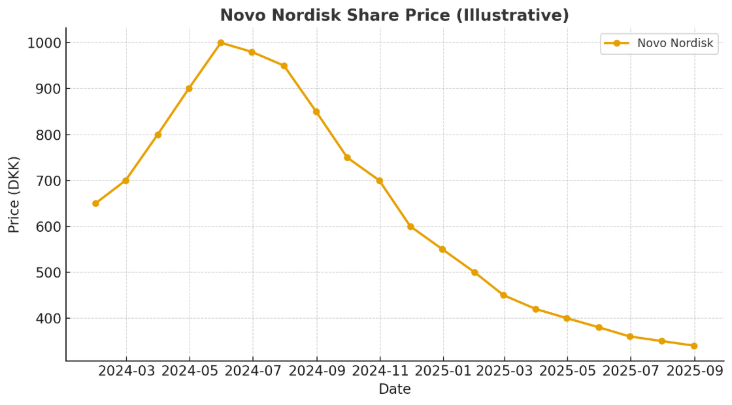
Two recent stories underline this. First, Novo Nordisk lost a fifth of its value in a single day after lowering its 2025 profit forecast. The company is still set to grow – just not at the sky-high levels investors had assumed. The result? Shares fell two-thirds from their peak, punishing anyone who believed growth would continue in a straight line.

Chart 1: Novo Nordisk's sharp share price fall shows how quickly lofty forecasts can unravel.

Chart 1: Novo Nordisk’s sharp share price fall shows how quickly lofty forecasts can unravel.

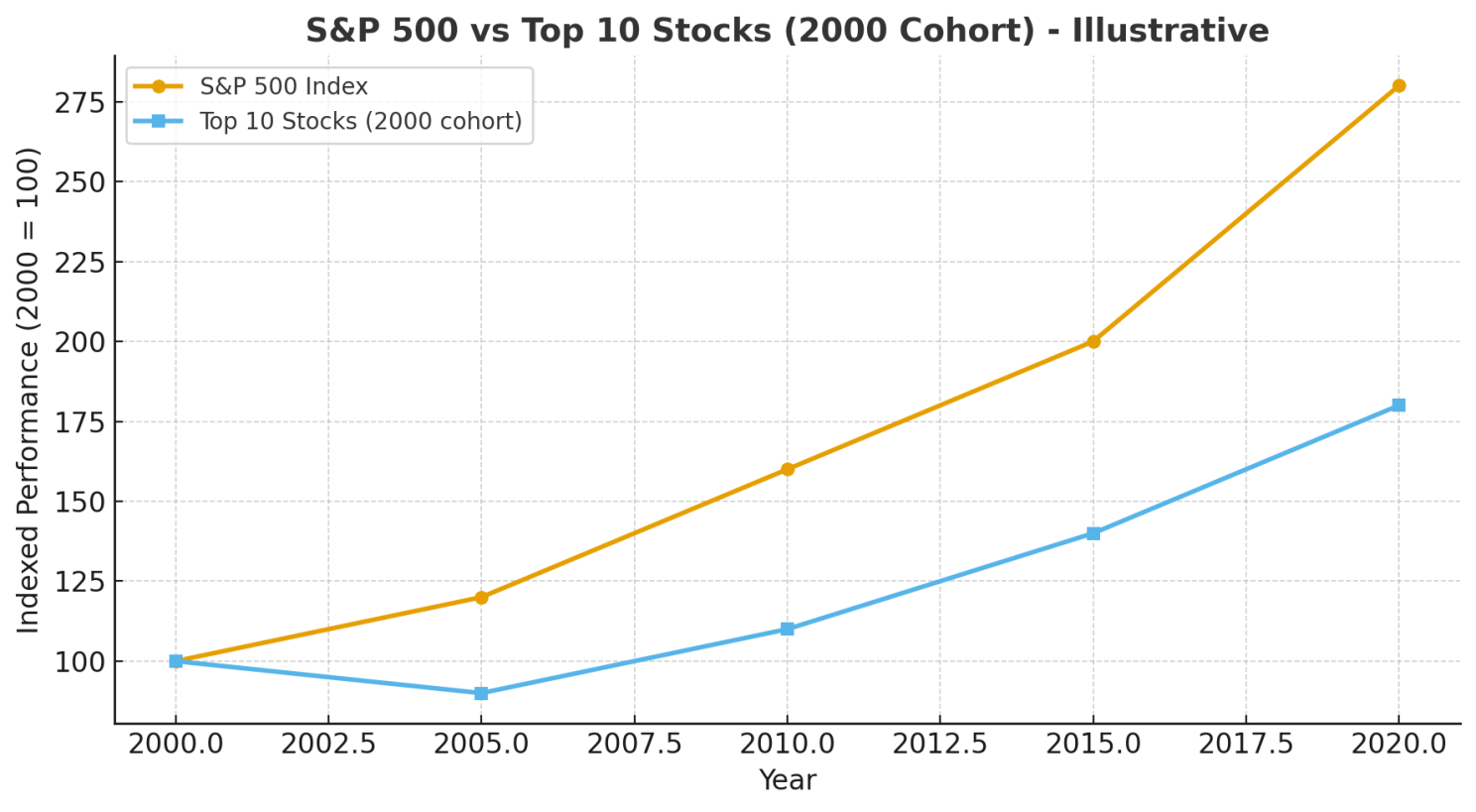
Second, Deutsche Bank data shows only two of the ten largest companies in 2000 have outperformed the S&P 500 since then. Some now earn less than they did 24 years ago. Today’s “Magnificent Seven” may look unstoppable, but history suggests otherwise. Forecasts built on confidence often crumble under reality.

Chart 2: The top 10 stocks of 2000 underperformed the S&P 500 over the following two decades, a warning for todays market favourites.

Chart 2: The top 10 stocks of 2000 underperformed the S&P 500 over the following two decades, a warning for todays market favourites.

So what does this have to do with bonds? Everything.


Bonds aren’t equities – and that’s the point

It’s tempting to apply the same logic to bonds that we use with equities: buy the index, avoid active managers, keep costs low. But fixed income is different.

  • The Bloomberg Global Aggregate Index tracks over 31,000 securities across 72 countries.
  • By comparison, the FTSE All-World Index covers around 4,200 equities.

Bond markets are vast, fragmented, and constantly evolving as new issues replace old ones. Companies issue one class of shares, but often dozens of bonds, each with different maturities, coupons, and structures.

That complexity creates inefficiencies – and inefficiencies create opportunity.

📖 For context, see the FCA’s overview of fixed income products and risks.


Why active fixed income still matters

In equities, active managers often struggle to beat the benchmark after fees. In bonds, the story can be different.

Active managers can:

  • Unearth overlooked bonds that rarely trade but offer attractive risk-adjusted returns.
  • Tilt towards improving economies, where sovereign yields are falling.
  • Select issuers with strengthening fundamentals, where credit spreads may tighten.

They don’t need to forecast the future perfectly. They just need to use flexibility to reduce exposure where risk is rising, and increase exposure where markets misprice resilience.


Managing risk when forecasts fail

For clients, the bigger benefit isn’t just potential alpha – it’s risk management.

When expectations break down in equities, valuations can collapse overnight (as Novo Nordisk showed). In fixed income, active managers can adjust portfolios dynamically to smooth returns, protect capital, and keep portfolios aligned with client goals.

That agility supports:

  • Capital preservation for clients worried about volatility.
  • Income stability when yields are attractive but uneven.
  • Outcome alignment, a key requirement under the FCA’s Consumer Duty PS22/9.


Passive vs. active – not either/or

None of this means passive bond funds don’t have a place. They remain a low-cost way to gain broad exposure. But framing the choice as “all passive” or “all active” is misleading.

The sweet spot may be benchmark-aware strategies: active funds that keep costs in check while using their flexibility to manage risk and exploit inefficiencies. Vanguard’s Global Core and Global Strategic Bond Funds are examples, designed either as standalone allocations or complements to index exposure.


What advisers and paraplanners should take away

For advisers, the key message for clients is simple: forecasts will fail. What matters is whether portfolios can flex when they do.

For paraplanners, this means documenting the rationale clearly:

  • Diversification beyond the benchmark
  • Risk management as well as return
  • Alignment with client objectives, not just performance targets

That alignment is what makes suitability defensible – and what helps clients stay invested when forecasts inevitably disappoint.


The bottom line

Forecasting may be fragile, but strategy doesn’t have to be. Equity markets will always lure investors with stories of endless growth. History suggests those stories often end badly.

Bond markets, by contrast, offer scope to use complexity and inefficiency as tools for stability. Active fixed income isn’t about outguessing the market. It’s about building portfolios that remain resilient when the forecasts go wrong.

And if the last few months have shown us anything, it’s that forecasts willgo wrong.

👉 If this resonates with what you’re seeing in client conversations, we’d love to hear from you.


Tax-Free Wealth Building in 2025: The Rise of Whisky Casks

A niche investment going mainstream

For years, whisky cask investment has been a quiet corner of alternative investing – something discussed more in collectors’ circles than in financial advice meetings. But 2025 is seeing a shift. Headlines talk about whisky casks as a tax-free wealth-building tool and investors are increasingly curious about whether this is a serious asset class or just another fad.

Cask Capital describes whisky casks as one of the “last tax-free investment opportunities in the UK,” highlighting both the capital gains tax exemptionand the growing global appetite for rare spirits. But as with any trend that promises outsized returns, financial advisers and paraplanners need to separate the marketing from the mechanics.


Why investors are drawn to casks

According to recent commentary:

  • Tax treatment: Whisky casks are classified as a “wasting asset” in the UK. This means they typically escape Capital Gains Tax (CGT). That’s a powerful hook for clients searching for tax efficiency.
  • Supply and demand: Whisky production is limited, maturation takes years, and global demand-particularly from Asia and North America-has never been stronger.
  • Portfolio diversification: As an alternative investment, casks aren’t correlated with equities or bonds. They can add resilience in volatile markets.

It’s no wonder some investors now see whisky casks as a tangible, inflation-resistant store of value.


The practical risks

Of course, not all that glitters (or glows amber in a glass) is gold. A sober perspective is essential.

  • Liquidity: Selling a cask isn’t like trading a share. The market is opaque, and exits can be slow.
  • Valuation uncertainty: Cask value depends on age, distillery, and storage conditions. Transparent pricing data is limited, making it difficult to assess fair value.
  • Fraud and mis-selling: Which? recently warned about firms overpromising or disguising fees in whisky investment schemes. This is a red flag advisers must highlight when clients show interest.

The FCA has also flagged concerns about niche, unregulated investments being sold without appropriate risk warnings. As with crypto a few years ago, consumer protection is the big question mark.


Choosing the right cask (if at all)

For clients who remain intrigued, there are some practical filters:

  • Work with reputable brokers – Organisations like London Cask Traders and Cask Capital provide educational resources and (to an extent) pricing frameworks.
  • Focus on established distilleries– Well-known Scottish distilleries with consistent brand value are less risky than newer entrants.
  • Understand storage– Where and how the cask is matured affects both quality and value. Poor warehousing can erode returns.
  • Plan the exit– Whisky isn’t just held; it’s sold. Advisers should stress the importance of understanding resale channels and timelines.

For advisers, the key is helping clients weigh the romance of owning a whisky cask against the practical realities of managing an illiquid, alternative asset.


What to tell clients

  • Whisky cask investment candeliver attractive returns, but it’s not risk-free.
  • Tax benefits are real but depend on HMRC continuing to classify casks as wasting assets. Policy changes could alter this.
  • Due diligence is critical. If a client brings you a glossy brochure promising double-digit annual returns, approach it with the same scrutiny as any unregulated scheme.

Ultimately, advisers should frame whisky casks as a specialised, high-risk allocation-a potential addition for well-diversified, high-net-worth clients who understand the risks, but not a mainstream tax solution.


Our take

At We Complement, we don’t dismiss niche investments outright. They can spark valuable client conversations and open doors to deeper planning discussions. But our role-as paraplanners, advisers, and suitability consultants-is to stress test the logic, highlight the pitfalls, and make sure clients are making decisions with eyes wide open.

As the FCA’s Consumer Duty continues to sharpen expectations around evidencing good outcomes, it’s never been more important to document whyan investment is or isn’t appropriate. And whisky, for all its allure, demands that kind of clarity.


Final thought

Alternative investments like whisky casks will always attract attention, particularly in uncertain markets. The real test for advice firms is whether these ideas are handled with rigour and balance. Clients deserve both the excitement of opportunity and the discipline of good governance.

If this resonates with what you’re seeing in client conversations, we’d love to hear from you.


With cash rates peaking and bond yields back in the spotlight, many income strategies are being re-evaluated. For advisers and paraplanners, the question is no longer “Where can we park money for 5%?” – it’s “What’s going to sustain that income for the next five years?”

UK infrastructure might just be one of the answers. It’s a sector that’s been quietly generating consistent income, even while market sentiment took a nosedive. So this week, we’re revisiting the case for infrastructure in income portfolios – and whether its fundamentals still stack up.


Infrastructure: Out of Favour, Not Out of Options

UK-listed infrastructure funds have had a tough run. As interest rates climbed, discount rates rose, which put downward pressure on the capital value of long-dated income streams – a big hit to assets like schools, hospitals, and renewables with 20–30 year leases.

But not all funds are equal — and the ARC TIME UK Infrastructure Income II Fundis a good case study in how this sector continues to work for the right clients.

  • 12-month return (to June 2025): -4.52%
  • Current yield: 5.15%, paid monthly
  • Occupancy rate: 96%+

Despite the drop in NAV, income delivery has remained stable – and for investors in drawdown, that’s arguably more important than daily pricing.


Why Infrastructure Got Bumpy

Here’s what’s been weighing on infrastructure valuations lately:

1. Rising Discount Rates

Higher interest rates reduce the present value of future cashflows, which disproportionately affects assets with long-term revenue contracts — like infrastructure.

2. Political Uncertainty

As highlighted in Professional Adviser’s recent coverage, UK government changes to planning rules and renewable support have created instability, delaying capital investment and spooking markets.

3. Sentiment and Share Price Discounts

Many listed infrastructure trusts are trading at significant discounts to NAV — not necessarily because of performance issues, but due to investor sentiment and sector outflows.


Still a Case to Be Made?

There’s good reason not to throw the baby out with the bathwater.

The fundamentals of income-focused infrastructure remain solid:

  • Stable tenants(often government or NHS-backed)
  • Inflation-linked rental agreements
  • Essential service assetsthat aren’t subject to discretionary spending

That monthly 5%+ yield is still being delivered. And for investors willing to look past current sentiment, the current pricing might even represent value.


How Advisers Are Using Infrastructure Now

According to M&G Wealth’s Q2 2025 investment update, infrastructure:

  • Is stabilisingfollowing 18 months of negative flows
  • Remains popular with drawdown clients, particularly those aged 60+
  • Is being blendedwith other alternative income sources like REITs and corporate debt

Advisers aren’t abandoning infrastructure – they’re simply repositioning itas part of a diversified income strategy, rather than a stand-alone winner.


Portfolio Positioning: What to Consider

When reviewing infrastructure in client portfolios, keep these practical points in mind:

  • Match the strategy to the objective– infrastructure is best for income, not growth
  • Look beyond short-term returns– is the fund delivering consistent yield?
  • Watch for transparency– does the fund disclose occupancy, rent collection, and lease terms clearly?
  • Check liquidity– some daily-dealt funds are more suitable for platform use than listed trusts, especially for cautious clients
  • Educate clients– infrastructure income is real and physical, but pricing can be volatile


Our View

Infrastructure isn’t broken – it’s just caught in the wrong moment. As rate cuts begin to appear on the horizon, and investor nerves settle, long-duration income strategies like infrastructure could quietly return to favour.

If you’re building portfolios for clients who want predictable income with real-world impact, this sector is still worth serious consideration.

Got questions? Just reach out – no pitch, just people who get financial advice.

Published in the Investment Matters series by the We Complement team Subscribe to our LinkedIn newsletter for weekly insight on what’s moving inside financial planning.


👋 Hi, I’m Lucy. At We Complement, we like to keep an eye on the less-talked-about corners of investment conversations, especially when clients are exploring passions outside the platform.

This month? It’s coins.

And not just any coins – rare, historic, and highly collectable coins that are attracting attention as both personal heirlooms and alternative assets.

So, should planners take it seriously? Here’s what you need to know when a client wants to talk sovereigns and silver instead of stocks and shares.


💰 Why Coins Are Gaining Traction in 2025

✅ Tangible value – Coins are physical assets with intrinsic metal content and historic or cultural significance. Clients like that they’re real, portable, and often beautiful.

✅ Portfolio diversification – The coin market doesn’t move in sync with equities, which can make it an appealing hedge in volatile markets.

✅ Generational appeal – Coins often carry a story, making them attractive for legacy planning or gifting strategies.

✅ Rising interest – 2025 is seeing increased demand for rare UK coins, especially with collectors eyeing undervalued editions from the late 20th century and post-monarchy transitions.

✅ Tax perks – Certain UK coins (e.g. legal tender gold sovereigns and Britannias) are exempt from Capital Gains Tax.


⚠️ Things to Flag with Clients Before They Dive In

Not all coins are created equal: Just because it’s old or gold doesn’t make it valuable. Rarity, demand, condition, and provenance matter most.

It’s a specialist market: Liquidity can be limited, and pricing is influenced by collectors, not markets.

Risk of forgeries: Authentication and trusted dealers are non-negotiable, especially in the online marketplace.

Storage and insurance: Coins may need secure vaulting, and premiums can add up.

Sentiment vs strategy: Many clients buy coins because they love them. That’s fine, but it should be treated as a passion investment, not a guaranteed growth vehicle.


🧠 What Planners Should Keep in Mind

Know the tax angles: Gold bullion coins that are UK legal tender are CGT-free. That’s worth factoring into planning conversations.

Ask about intent: Is the client building a collection for fun, or as part of a long-term portfolio? The answer changes the advice.

Encourage slow starts: As with any alternative investment, starting small and learning from experts is a safer route in.

🔎 Want to go deeper? Here are some useful reads:

Investing in Coins: Why 2025 is the Year to Buy

Top 5 Rare Coins to Watch in 2025

Collectable Coins in the UK: 2025 Guide

Ultimate Guide to Coin Collections UK


📌 Summary for Financial Planners

Coins can be a compelling addition for clients who value history, physical assets, and tax efficiency. But as with art or wine, passion can blur investment judgment. Help clients approach coin collecting with clear eyes and the right questions.

📩 Want to explore how we support advice firms with niche client conversations like this one? Let’s chat.


Market Update – Confidence Returns, But Keep a Steady Hand

US equities led the charge in early June, with the S&P 500 posting its strongest monthly gain in 18 months. Strong employment data and renewed hopes of improved US-China trade relations helped ease market nerves. Emerging markets also joined the rally, buoyed by positive sentiment globally. But advisers should stay alert: optimism doesn’t cancel out volatility. With global elections in full swing and rate expectations shifting weekly, there’s plenty still to keep clients on edge.

✅ Adviser tip: Don’t wait for a wobble, use recent strength as a proactive check-in point. “Here’s what’s changed, and what it means for you.”

✅ Paraplanner tip: Add a global equities snapshot to mid-year reviews. Clients appreciate seeing performance and purpose side-by-side.

Source: Sarasin & Partners


Renewables – Progress or Pause in a Politicised World?

Global renewable energy capacity hit a record-breaking 510GW in 2023—the 22nd consecutive year of growth—and 2024 kept the momentum going, driven by supportive policies and ambitious global targets.

But 2025 has brought fresh uncertainty.

Following the January inauguration of President Trump, the US has started rolling back several key clean energy policies. Early executive orders have promoted oil and gas, imposed new restrictions on wind development, and signalled an intent to withdraw from the Paris Agreement once again.

At a recent @Greenbank Green Shoots webinar, industry leaders asked the big question: Could this derail the clean energy transition – or just reshape it?

Adviser tip: ESG-conscious clients may need more context than ever. Be ready to explain how policy shifts affect long-term investment themes.

Paraplanner tip: Review ESG notes and fund selections—clear documentation builds confidence when clients are questioning headlines.


Platform Watch – Timeline Just Got More Powerful

Timeline continues to level up, making life easier for advisers and paraplanners alike.

Here’s what’s new:

✅ Support for Offshore Bonds, JISAs, and Joint GIAs

✅ Improved integrations with intelliflo, Plannr Technologies Limited, and moneyinfo

✅ Real-time transfer tracking and secure client messaging

✅ Letters of Authority (LoAs) now 98.8% error-free, with better visibility and provider tracking

But the standout? Modular Reporting.


This new feature lets you build client reports your way – quickly, clearly, and with no wasted pages.

🧩 Pick the sections you need (like performance, planning summaries, or fee analysis) 🧩 Tailor layouts to suit each client 🧩 Compare portfolios side-by-side 🧩 Add your own commentary, and hit send

Whether you’re using a ready-made template or building your own, Modular Reporting saves time and delivers clarity.

Adviser tip: Use modular reports to make client reviews more visual, relevant, and easy to follow

Paraplanner tip: Create go-to templates for common client types, then customise in seconds


Final Thought – Tech Helps, But People Make the Difference

From political shocks to platform wins, this month’s stories remind us: the tools might change, but trusted advice is what clients remember. If you’re feeling the pinch on time, capacity, or clarity, we’re here. At We Complement, we support advisers behind the scenes with smart, scalable paraplanning. You shine out front – we’ve got your back.

📩 Got questions? Need an extra pair of hands? Send @amynorth a message – she’s always up for a proper chat (and might just solve three of your problems in one go).


As a paraplanner here at We Complement, I’m always looking at how real-life passions show up in financial plans.  Over the past few months, I’ve had more than a few conversations about art – not in a museum sense, but as a genuine investment consideration. Whether it’s a client asking about owning a painting outright, or exploring fractional platforms, it’s clear that art is becoming more than just a ‘nice to have’ on the wall.

So this month, I’ve pulled together the key things planners should know when this topic comes up, because as with any specialised investment, the detail matters.


Art as an Investment: Pastime or Portfolio Play?

The Upside: Why Clients Are Drawn to Art

– It’s tangible and meaningful. Unlike a unit price on a platform, a painting is something clients can see, enjoy, and connect with, often for years.

– Potential for growth. While speculative, some emerging artists or trending movements do appreciate significantly over time.

– Diversification benefits. Art doesn’t track the stock market, so it can offer a hedge during volatility or inflation spikes.

– Legacy appeal. For some clients, it’s not about returns, it’s about passing on something culturally or emotionally valuable.

– New ways in. Platforms now allow fractional ownership, curated digital collections, and simplified access. No galleries or auction houses required.


The Caution Flags: What Planners Should Consider

– It’s not liquid. Selling art is rarely quick or easy. Clients need to be in it for the long game.

– Valuing art isn’t straightforward. There are no balance sheets or earnings reports, just market trends, expert opinions, and what someone is willing to pay on the day. Costs add up. Storage, insurance, restoration, and transaction fees can bite into gains.

– Authentication matters. Provenance and condition are everything. A lack of due diligence can lead to expensive lessons.

– Trends change. Today’s darling can be tomorrow’s forgotten name. The art world moves fast, and not always predictably.


What to Keep in Mind as a Planner

– It’s often a passion play. For many clients, art ownership is about enjoyment and legacy – not just returns. Help them frame expectations accordingly.

– Tax treatment differs. Capital gains rules for art don’t align neatly with standard investment products – make sure clients understand the implications.

– Due diligence is critical. If a client is serious about entering the art market, connect them with trusted specialists or platforms that prioritise transparency and authentication.


Summary

Art can be a genuinely enriching (and sometimes lucrative) addition to a client’s broader portfolio, but it’s not for everyone. Approach it as you would with any alternative investment: with curiosity, caution, and context.

Further Reading for Financial Planners

How to Invest in Art for Beginners: Why Art is a Good Investment in 2025

How to Invest in Art and Collectibles: From Pastime to Portfolio


Helping financial planners and paraplanners turn insight into action.

US Equities – Political Risk or Practical Diversification?

An increasingly frequent question from clients: “Am I indirectly supporting Trump if I invest in US markets?”

While it’s a stretch to suggest that holding US equities equates to political endorsement, this is a reminder that for some clients, values and perceptions matter just as much as performance.

  • The US remains a global growth engine, and for most clients, exposure is about long-term diversification, not politics.
  • However, for clients who are ethically conscious—or simply concerned about where their money flows—it’s worth engaging in that conversation seriously.

Planner tip: Add values-based preferences to your review agenda. Even if clients don’t raise it, opening the door shows that you’re listening. ✅ Paraplanner tip: If clients have specified ESG or values preferences, reflect this clearly in your investment rationale and documentation.

🔗 Read more – FT Adviser


💷 ISAs – Still a Favourite, But Facing Reform?

ISAs continue to be the go-to tax wrapper for UK savers—but their structure could soon change. The Treasury is actively reviewing the ISA system, including:

  • Consolidating the various ISA types (Cash, Stocks & Shares, LISA, IFISA), which could streamline choice.
  • Reviewing access rules and considering incentives to encourage long-term investing in UK markets.

The current system still works—but clients with multiple ISAs, or unclear product choices, may benefit from early clarification.

Planner tip: Encourage clients to make full use of this year’s allowances while rules are still stable. It’s a great check-in opportunity. ✅ Paraplanner tip: Review client records for ISA fragmentation—especially where Lifetime or Innovative Finance ISAs may soon be affected.

🔗 Read more – FT Adviser


📉 Volatile Markets – Where Were the Advisers?

A new report reveals that only 2% of investors sought advice during recent market volatility. That’s a missed opportunity—for them and for the profession.

It highlights how many retail investors are still “going it alone,” and how few understand the reassurance and value that advice can provide during downturns.

Planner tip: Market dips are a cue to reach out. A short, steadying message can do more for trust than a flashy annual review. ✅ Paraplanner tip: Develop a “market update” template that can be adapted quickly for client emails or review packs when turbulence hits.

🔗 Read more – FT Adviser


📈 Platform Watch – AJ Bell Breaks £90bn

AJ Bell has surpassed £90bn in assets under administration, with profit and adviser adoption both up. It’s a signal that:

  • Platform choice matters more than ever—especially under Consumer Duty scrutiny.
  • Scale brings benefits, but also the need to keep an eye on service standards, integrations, and pricing.

Planner tip: Review whether your preferred platform still meets your clients’ evolving needs—and whether your recommendations reflect this. ✅ Paraplanner tip: Track new functionality or cost changes from providers. An internal comparison matrix can make reviews far more efficient.

🔗 Read more – Money Marketing


🧭 Final Thoughts – Make Proactivity Your USP

What links this month’s stories? Not just market noise or new rules—but the value of being one step ahead.

  • Clients rarely call during turbulence—but they remember who checked in.
  • ISA rules might not change for months—but reviewing early positions you as thorough.
  • A client’s offhand comment about US politics? That’s your invitation to have a deeper conversation.

At We Complement, we help advice firms deliver real value through smart, reliable paraplanning—whether it’s keeping reports compliant and clear, improving client communication, or freeing up time for more strategic conversations.

📩 If you’re looking to streamline your paraplanning process or just want extra capacity you can trust—get in touch. We’d love to support your team behind the scenes, so you can shine out front.


ISO/IEC 27001:2022 certified
UKAS-accredited information security management system
You can verify the validity of our ISO certificate via the UKAS register.

ISO/IEC 27001:2022 certified

Affiliate of

Consumer Duty Alliance

Proud to work with

Paradigm ValidPath

Contact

Old Brewery Business Centre
Castle Eden
Co. Durham
TS27 4SU

Tel: +44 (0)1472 728 030
Email: hello@wecomplement.co.uk

© 2026 We Complement | Privacy Policy
We Complement Limited registered in England & Wales under company number 13689379, ICO number ZB427271. Registered address: Old Brewery Business Centre, Castle Eden, Co. Durham, TS27 4SU.