White Paper Series
Advice, Evidence & Judgement
Technology and AI can make information easier to access and parts of the advice process faster, but that raises some important questions too.
How do we know the tools and processes we rely on are actually working? How do we preserve professional judgement? How do we evidence not just what was recommended, but why? And when something changes, how do we know it actually made things better?
In this series of white papers, Tony Slimmings, Founding Director of We Complement, explores some of those questions and the issues advice firms are likely to need to think about more carefully over the coming years.
Advice, Evidence & Judgement looks at how firms can better evidence, test and learn from the advice they give, without losing the professional judgement that sits at the heart of good financial planning.
Paper 01
Tony Slimmings · September 2026
Knowledge is cheap. Judgement is not.
AI can find, summarise and process information faster than ever before. But access to knowledge is not the same as knowing what to do with it.
In the first paper in the series, Tony looks at professional judgement in financial advice, why similar clients can quite reasonably receive different recommendations and why being able to evidence that judgement is becoming increasingly important.
Paper 02
Tony Slimmings · September 2026
How do you know your AI advice tool works on your files?
AI tools can look impressive in a demonstration, but that tells a firm very little about how they will perform on its own advice files.
In the second paper in the series, Tony looks at how firms can test AI against real cases, understand what it misses or raises unnecessarily, and make sure professional judgement and human oversight remain visible. The paper also includes ten practical questions to ask before relying on an AI demonstration or headline accuracy figure.
Paper 03
Tony Slimmings · October 2026
Would your file checks catch a mistake you planted?
Most firms can show that advice files are being checked. The harder question is whether those checks would actually detect an important issue if one was present.
In the third paper in the series, Tony looks at a practical way of testing that: take a safe test case, deliberately introduce a known defect and see whether the normal review process finds it. The paper explores what to test, what a missed issue can reveal about the wider process and how to make the exercise useful without turning it into a way of catching people out.
Paper 04
Tony Slimmings · October 2026
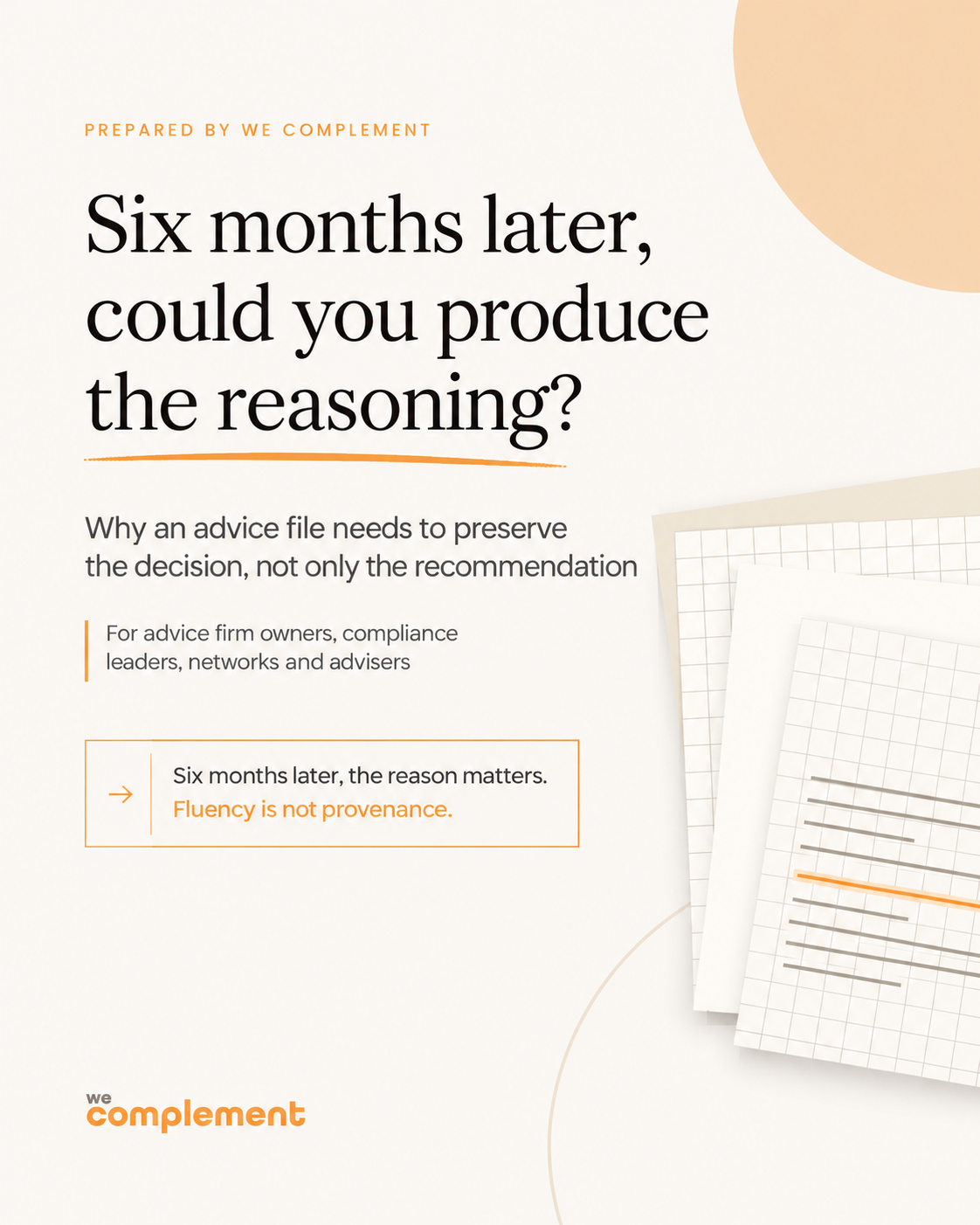
Six months later, could you produce the reasoning?
Most firms can find the suitability report six months later. The harder question is whether someone coming back to the file can understand why the recommendation was made at the time.
In the fourth paper in the series, Tony looks at why an advice file needs to preserve the decision, not only the recommendation. It explores the evidence, trade-offs, challenges and professional judgement that should still be visible when somebody else needs to understand the case later.